

Rope Access Pressure Washing: When Lifts Won’t Work and How High-Rise Cleaning Is Done
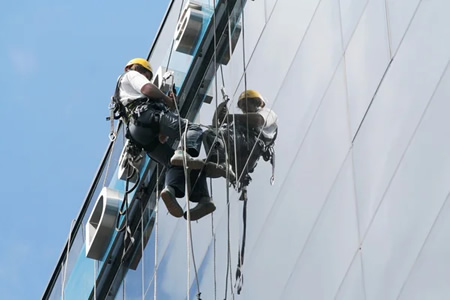
When tight alleys, busy sidewalks, or complex architecture make equipment placement impossible, rope access pressure washing in Houston, TX becomes the smart, safe way to clean at height. This method lets trained technicians position themselves on the building so they can wash façades, frames, and features with control and minimal disruption. If you need a trusted team for exterior cleaning and want to understand how the process works, this guide breaks it down step by step and explains where it outperforms lifts in real Houston conditions.
When Lifts Won’t Work in Houston
In many parts of Houston, space is at a premium. Downtown, Greenway Plaza, the Galleria area, the Energy Corridor, and the Texas Medical Center often have narrow setbacks, active loading zones, and landscaping that limit where a lift can sit. Add constant foot traffic and vehicle lanes, and you can see why moving a boom or stage into place is sometimes unrealistic.
- Ground constraints: courtyard layouts, narrow alleys, planters, and glass canopies leave no room for lift outriggers.
- Busy right-of-way: sidewalks and lanes around towers are too active to block for long periods, even during off-peak hours.
- Irregular façades: curves, overhangs, sunshades, and recessed glass make it hard for a lift basket to reach evenly.
Rope access solves these problems by reducing the ground footprint to a small, well-marked drop zone. Technicians descend exactly where the work is, which avoids the stop-and-go repositioning you often see with lifts. If you want a broader overview of cleaning options beyond high-rise work, review our main page on pressure washing in Houston for residential and commercial surfaces across the city.
How Rope Access Pressure Washing Is Done
Think of rope access as careful choreography. The crew uses tested techniques to move up, down, and across the face of the building while keeping tension and redundancy in the system. They work in defined sections from the top down so rinse water and debris do not streak finished areas below. Close positioning allows steady control of pressure, angle, and distance to protect glass, sealants, and coatings.
On complex façades with fins or deep frames, the cleaner can lean in and detail edges so streaks do not hang on mullions or spandrels. This precision is the biggest advantage of rope access compared to equipment that keeps the operator several feet away from the wall.
Safety Planning That Comes First
Safety starts long before a rope is clipped. A written plan outlines access points, tie-ins, public protection, and communication with building staff. The team assesses roof anchors or chooses temporary systems rated for the loads they will see. They also define drop zones at grade, shield entrances, and coordinate with security or front-of-house teams, which is critical in busy districts like Downtown and Uptown.
Public protection and clear communication are non‑negotiable on any rope access project. That means signage, barricades, and a simple plan that staff and tenants can understand. Scheduling often targets early mornings for cooler temperatures and fewer pedestrians, which helps with even drying and smoother rinsing in our Gulf climate.
Access Methods and Gear for High-Rise Work
Rope access technicians rely on a small set of specialized tools that are simple, redundant, and strong. Primary and backup lines, connectors, seats, descenders, ascenders, and lanyards are paired with careful edge protection. The washing setup uses controlled PSI, appropriate nozzles, and biodegradable detergents designed for the target surface. Heated water can be used for certain soils, but the goal is always a clean result that respects the material.
- Redundancy: independent primary and backup systems reduce risk during position changes.
- Control: adjustable flow and tips keep pressure within safe ranges for glass, EIFS, metals, and precast.
- Protection: pads and sleeves keep ropes safe where they pass edges, coping, or parapets.
For projects where lifts clearly are not an option, you can see how we approach these challenges on our dedicated page for rope access high‑rise work, including how we manage drop zones and balance speed with care across occupied properties.
Local callout: Houston’s humidity and shade speed up algae growth on north and east elevations. Planning lighter, more frequent cleanings often prevents heavy buildup and reduces tenant disruption compared to occasional deep clean cycles.
Which Building Types Benefit Most in Houston
Rope access is a strong fit for mixed-use towers, hotels, hospitals, and corporate campuses with tight plazas. It also shines on buildings with complex forms, like curved glass, deep overhangs, or intricate sunshade arrays common in the Energy Corridor and around the Museum District. Properties that border transit lanes or have constant events also value the lean setup because it lowers impact on guests and operations.
Many sites pair rope access cleaning with window detailing and light façade maintenance tasks. Close positioning lets the team inspect sealant lines, note failed gaskets, or flag staining patterns for management. Those notes help property teams plan future work with fewer surprises.
Weather, Timing, and Tenant Comfort
Houston weather moves fast. Summer heat and pop-up storms create short windows that favor a method that mobilizes quickly. Rope access crews can climb and clean in sections, pause for weather, then resume without moving large equipment. That reduces delays and helps keep entrances open during check-in or shift changes.
Wind, lightning, and slick surfaces are go or no‑go factors. Crews watch conditions and adjust sequencing to keep everyone safe. Early morning starts also cut glare on glass and leave more time to rinse away suds before peak sun, which can help prevent spots on sensitive panels.
What To Expect Before, During, and After Cleaning
Here is the basic rhythm for a typical high‑rise cleaning in Houston. The exact plan may vary by building height, surface type, and access. Any needs for lane or sidewalk control are addressed with the property team in advance and follow local guidance where required.
- Pre‑site review: The team walks the property, identifies roof access, tie‑in locations, water sources, and public areas below. Photos document starting conditions.
- Plan and notice: A simple memo outlines dates, hours, and any affected entrances. Tenants and staff know what to expect.
- Setup and protection: Ropes are staged, anchors checked, and drop zones marked. Sensitive finishes, landscaping, and entry mats are covered.
- Top‑down wash: Technicians descend in lines, cleaning methodically while protecting frames, joints, and sealants.
- Rinse and review: The crew rinses thoroughly, removes protection, and shares photos and notes for management files.
If your property also needs ground-level care, you can review broader exterior services and surfaces on our main pressure washing page. It shows how house washing, driveways, and storefronts fit into a maintenance plan for portfolios that mix low-rise and high-rise assets.
Surface-Safe Results With Close Control
Being just inches from the surface lets technicians fine-tune angle and distance to avoid lifting paint or scarring soft materials. On glass walls, steady passes help reduce spotting along frames. On coated metals, gentle settings protect the finish while still clearing soot and runoff streaks. On precast and masonry, controlled passes help avoid uneven patterns that can stand out when the sun hits the wall at an angle.
Always test a small area first. A quick test confirms nozzle, solution, and rinse steps for each material so the full cleaning proceeds smoothly and predictably.
Minimizing Operational Impact
Property teams in Downtown and near major venues want the lobby and sidewalks open. Rope access eases that pressure. The crew can stage on a small corner of the roof and a compact ground zone. Entrances remain usable, and noise stays low compared to heavy equipment. The result is a building that looks better without putting the day on hold for tenants, guests, or staff.
If you are comparing options across your Houston, TX locations, it can help to see how local conditions affect scheduling and scope on our Houston, TX pressure washing page. It outlines common surfaces and recent project highlights around the metro.
Rope Access vs. Lifts: A Practical Comparison
Both tools have a place. Lifts can be efficient on open sites with broad access and minimal public traffic. Rope access wins when you have limited ground space, complex shapes, or schedules that only allow short work windows. In practice, many portfolios use both methods depending on site layout and timing. What matters is choosing the approach that serves the building best.
Not sure where your property lands on that spectrum? A short site walk is usually enough to outline your options and recommend the safest, least disruptive plan for the finish and soil level you have today.
Examples From Around the City
A curved glass hotel near Uptown may call for careful detailing along sunshades and canopy edges. An office tower downtown might need early-morning starts, so lobby traffic stays smooth at opening time. A medical campus could ask for quiet hours near clinic entrances. Rope access adapts to each case with small adjustments to sequence and staging.
If you manage multiple properties or a mixed-use site, you can explore high-rise specifics and portfolio support on our page for rope access high‑rise cleaning. It explains how crews document progress with notes and photos so managers can track work without leaving the desk.
How We Communicate and Coordinate
Clear communication prevents headaches. The crew will agree on start times, elevator access, and roof keys. They will confirm where to stage and which areas to mark at ground level. If your building hosts events, they will plan around check-in windows and quiet hours. When weather shifts, they will adapt and update you. Afterward, you receive simple documentation that shows what was cleaned and where to focus next time.
For general cleaning outside of high-rise projects, check what we cover on our pressure washing services hub, including residential areas across neighborhoods from Bellaire to West University.
Why Choose a Local Houston Team
Local crews understand Houston’s heat, humidity, and Gulf winds. They know how pollen and construction dust accumulate, why algae blooms faster in shaded courtyards, and when morning shade helps prevent water spots. That knowledge turns into better plans and cleaner results with less disruption. It also means faster response when you need to align with weather windows after a storm front moves through.
Have a question right now? Call 832-869-0220 and ask about site walks in Downtown, Greenway, the Energy Corridor, or your part of town. A short visit is usually enough to outline anchors, drop zones, and a simple schedule.
Bring Rope Access Confidence To Your Next Cleaning
The right partner will explain the plan in plain language and match the method to your building. They should cover safety steps, tenant communication, testing, surface protection, and how they will adapt if a wind shift or shower pops up. You should finish with a building that looks crisp from the sidewalk and up close at the frame lines, without turning the day upside down for the people inside.
To see how this approach fits your property, start with a quick overview of pressure washing in Houston and how it supports both low-rise and high-rise maintenance across the metro. Then take a closer look at the dedicated high‑rise service for a deeper dive into scheduling and documentation.
Ready to plan safe, low‑disruption rope access pressure washing for your Houston building? Talk with KT Power Washing & Sealing today and get a straightforward, written plan that fits your property.
Want a direct path to next steps inside a full exterior program? Visit our pressure washing page to see how ground-level surfaces, glass, and façades come together in one maintenance cycle, and how scheduling can be staggered to keep entrances open.